Click on the Edit Content button to edit/add the content.
Where to Find Professional Real Estate Courses in Chennai and Choose the Right Qualification
A real estate career can begin without a specialised university degree, but success depends on practical knowledge. The right qualification can lead to roles in property sales, consulting, leasing, marketing, valuation support, investment research, and property management.
However, Many entry-level jobs accept candidates who have completed secondary or higher secondary education. Still, training in property law, documents, market research, negotiation, finance, and compliance can improve your confidence and career options. The answer to “what is the qualification for real estate?” depends on the role you want.
If you’re searching for professional real estate courses in Chennai, compare the eligibility rules, syllabus, practical sessions, certificate, trainer experience, and career support. GSAR Real Estate Academy is one Chennai-based provider to evaluate before you select a course.
What Qualification Is Needed for a Real Estate Career?
Educational eligibility varies by course
A real estate course may accept students after Class 10, Class 12, graduation, or relevant work experience. Each academy sets its own rules, so confirm the latest eligibility directly with the provider before applying.
Graduates from commerce, business, finance, marketing, law, architecture, civil engineering, and related fields may have useful background knowledge. However, a specialised degree is not always required for entry-level sales, leasing, or customer support roles. Working professionals and career changers can also study real estate to move into the property sector.
Course eligibility is different from job eligibility. However, a training programme can teach you industry skills, while regulated work may require separate professional qualifications.
Employers value practical property skills
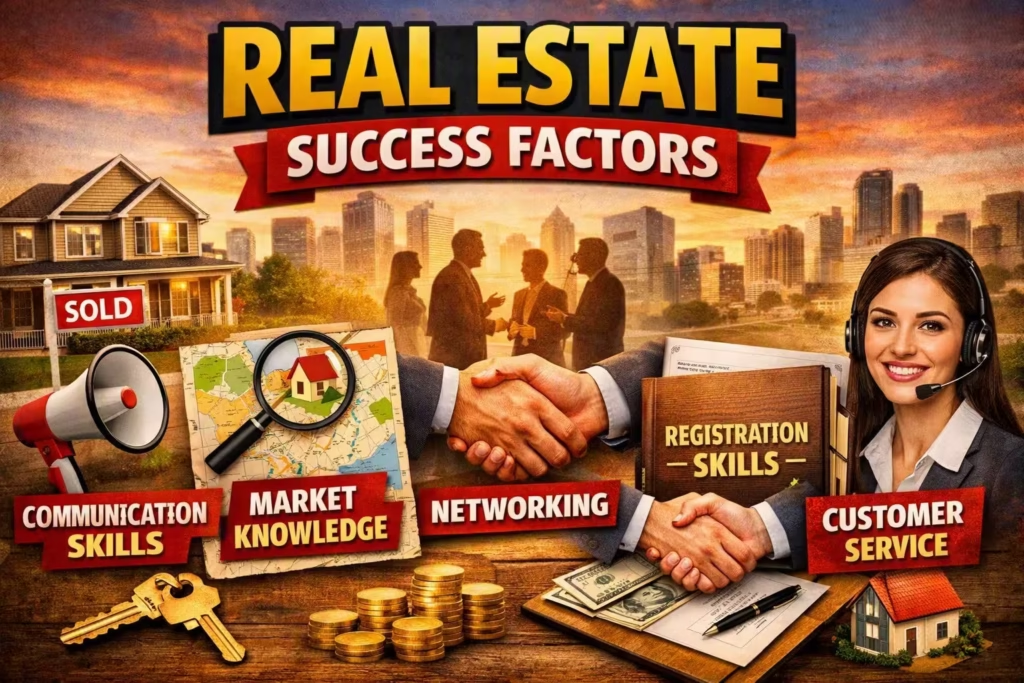
However, Employers look for more than a certificate. You should know how to study local markets, explain property features, qualify leads, handle calls, arrange site visits, negotiate, and follow up with clients.
You also need basic knowledge of sale agreements, lease documents, title records, approvals, encumbrance certificates, home loans, taxation, and due diligence. Digital marketing, CRM tools, property listing systems, and professional networking can help you generate better leads.
Real estate agents, developers, consultants, and property managers have different duties. A lawyer, architect, chartered accountant, or registered valuer must follow the rules that apply to that profession.
Before offering services, check current rules on agent registration, advertising, documents, and project transactions through TNRERA and other official sources. A course certificate does not automatically grant regulatory permission.
Choose Professional Real Estate Courses in Chennai for Your Career Goal
Match the course to your intended role
Your target role should guide your course choice. Sales training should cover prospecting, lead generation, client handling, site visits, negotiation, and deal closure. Property consulting needs stronger lessons in market research, documents, investment checks, and client advice.
Property management courses should include leasing, tenant relations, rent collection, maintenance, and daily operations. Learners interested in development should study land acquisition, approvals, feasibility, construction basics, and project finance. Investment-focused training should cover rental yield, pricing, risk, finance, valuation basics, and due diligence.
Check the syllabus before enrolling
A useful course should explain the full transaction process, not sales talk alone. Review whether it covers residential, commercial, retail, land, and industrial property.
Look for lessons on RERA, ethical practice, agreements, title checks, approvals, taxation basics, valuation, Chennai micro-markets, sales, marketing, CRM, and negotiation. Practical assignments, case studies, field visits, role-play, and simulated transactions show how well the course connects classroom learning with work.
For example, classroom, online, hybrid, weekend, and flexible courses suit different learners. Working professionals may need evening or weekend sessions, while beginners may benefit from direct trainer support.
For example,Ask about trainer profiles, assessments, study material, doubt clearing, mentoring, certificate title, issuing organisation, duration, and attendance rules. Also confirm whether the academy offers internships, placement assistance, interviews, industry contacts, or post-course guidance.
Where to Find Professional Real Estate Courses in Chennai
Assess GSAR Real Estate Academy carefully
TheGSAR Real Estate Academy website lists training in lead generation, client closing, property registration, negotiation, and legal documents. Its published course information also mentions real estate fundamentals, telecalling, field marketing, site visits, RERA, DTCP, CMDA approvals, Patta verification, and property legal checks.
The academy identifies Ganesh Kaniyappan as its founder and trainer. Its website lists more than 10 years of real estate experience and training for over 1,000 students. Treat these as claims published by the academy, then request current details about the syllabus, batch schedule, fees, certificate, assessments, and practical work.
Ask whether the course includes Chennai-specific market study and real transaction practice. Confirm how field visits, client role-play, legal document exercises, and career support are delivered. Also check recent reviews on more than one platform.
Compare providers using the same questions
Search through official academy websites, education directories, industry groups, and verified business listings. Do not choose a course based only on search position or promotional language.
Request a detailed brochure, sample lesson, trainer profile, fee sheet, refund policy, and admission process. Compare at least two or three providers on curriculum, practical exposure, faculty, certification, schedule, cost, and career support.
Avoid any academy that promises a guaranteed job, fixed income, or instant success without written conditions. Be cautious when trainer details, assessments, certificate information, or placement terms are unclear. A certificate can support your resume, but it does not prove skill or legal authority.
Build Real Estate Skills Alongside Your Qualification
Learn Chennai's local property markets
Area knowledge helps you answer client questions with accuracy. Study property types, rental demand, transport, schools, hospitals, employment hubs, infrastructure, civic services, and business zones.
Prepare short locality reports for areas such as OMR, Porur, Tambaram, ECR, Ambattur, and other Chennai markets. Compare advantages, limits, customer profiles, and investment factors using reliable information. Avoid repeating unverified price claims or future development promises.
Practise documents and due diligence
Learn the purpose of sale deeds, agreements to sell, lease agreements, parent documents, encumbrance certificates, approvals, possession records, and registration documents. Understand the need to check ownership, title continuity, land use, building permissions, and outstanding liabilities.
A real estate professional can organise an initial checklist, but legal verification belongs to a qualified lawyer. Technical, tax, structural, and valuation questions should go to the right professional.
Create proof of your practical ability
Build sample listings with correct descriptions, location details, measurements, amenities, and compliance information. Prepare a simple market comparison for selected Chennai localities and practise client follow-ups, viewing schedules, and negotiation scenarios.
Keep your resume, LinkedIn profile, course certificate, assignments, internship records, and genuine references together. This portfolio can help when you approach brokers, developers, property managers, and employers.
Turn Real Estate Training Into a Sustainable Career
Explore realistic career paths
After foundational training, you may apply for roles such as sales executive, property consultant, leasing advisor, developer sales coordinator, property management executive, CRM coordinator, documentation executive, or digital marketing specialist.
With experience, some professionals start a brokerage or property advisory business, subject to applicable registration and compliance rules. Income depends on skill, performance, market conditions, employer structure, and ethical client service.
Keep improving after the course
However,Course completion is a starting point. Therefore, gain supervised experience through internships, field assignments, brokerage work, or project-based learning.field assignments, brokerage work, or project-based learning. Build contacts with brokers, developers, lawyers, architects, valuers, lenders, and property managers.
Track qualified leads, client meetings, site visits, listings, follow-ups, and completed transactions. Continue learning about RERA updates, Chennai markets, finance, documentation, and digital tools.